What words would you use to describe your back-to-school educator gathering? Kick off? Launch? Retreat? Presentation Parade?
All too often, we educators forget to model what we know about how learning works when we gather for back-to-school work.
In my work helping to onboard ~125 Undergraduate Learning Assistants (ULAs) each August, our gathering has evolved over the last few years from a 3-hour “presentation parade” to interactive sessions modeling (and reflecting on) practices we want the ULAs to exemplify in their work and equipping them with the institutional information, skills, and context to be successful beginning their work.
Here’s how we made the change:
Backwards Design
What do you really want folks to take away from your gathering? What are your reasons to gather and how would you know if they had been met? We apply these backwards design principles in our teaching, and they are equally applicable – though often absent – for our meetings with educators.
If your gathering is primarily to disseminate information, it’s unlikely you need to gather. Consider instead sending a well-written and formatted email or a short video with the information you need to share.
If you want folks to use or do something with the information you want to share, shift the focus of the session to an activity that helps them build both the knowledge and the skill to do that something.
From Policies to Practice
The ULAs I work with need to be aware of several campus offices (Care Team, Ombuds, etc.) as well as University policies that apply to them as employees involved in education (FERPA, RVSM, etc.). Historically, we invited folks from each office or unit responsible to uphold the policy to come briefly explain their piece. Most presenters paused for questions, but it was primarily one-way communication, from the presenter to the room full of ULAs trapped in this presentation parade.
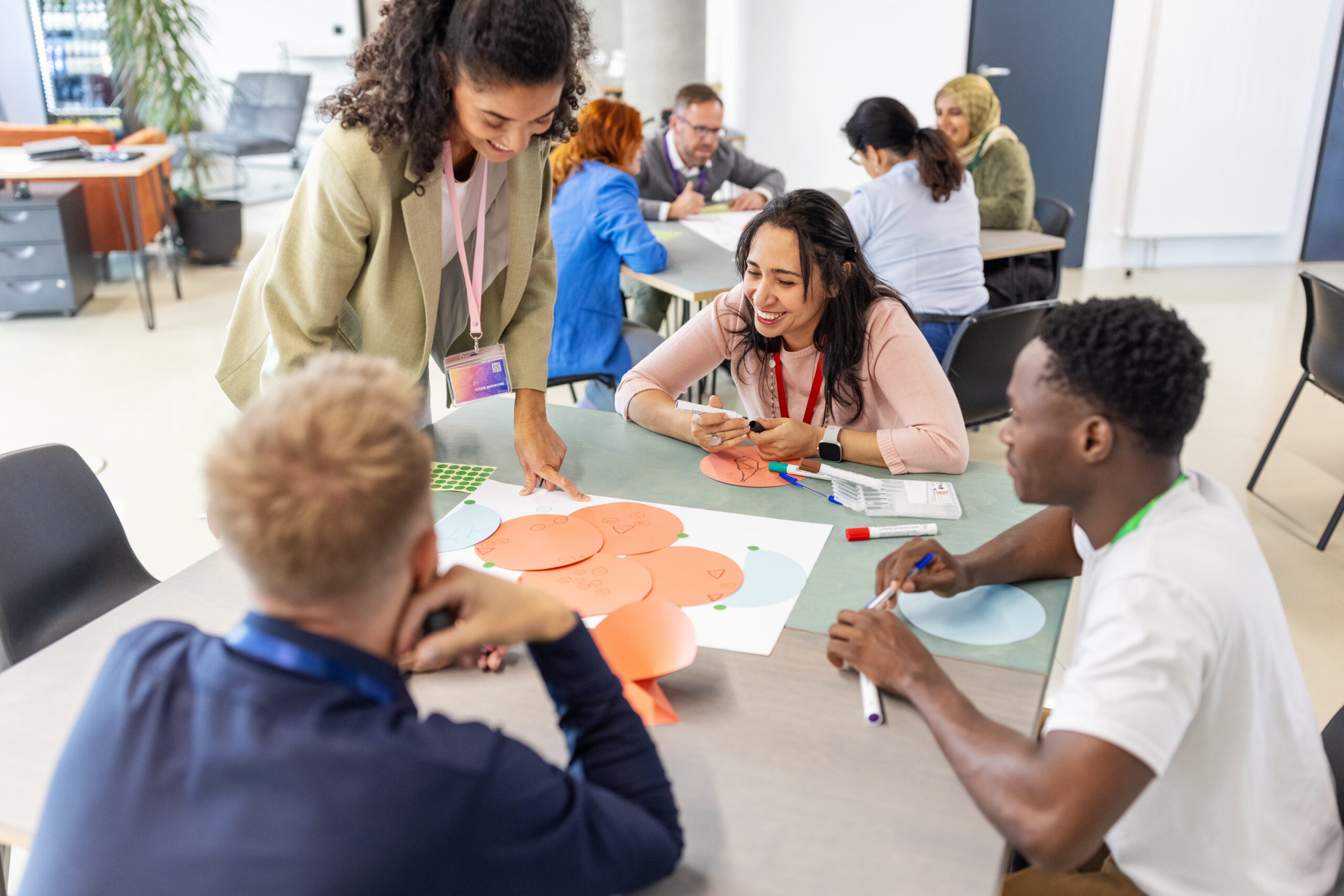
What I really need is for the ULAs to recognize that they are in a situation where one of those policies or campus office is relevant, and to know how to respond accordingly and/or ask for help. In collaboration with folks in the MSU Department of Mathematics, we developed a case study based, small group activity. Each group was assigned to find information about one campus unit or policy (links were provided) and discuss how to respond to a case study situation relevant to that office. We had one group for each unit or policy share out what they learned and how they would handle the case study scenario. These scenarios often elicited insightful, nuanced questions from other students and thus opportunities for deeper conversations about their work – the responsibilities, challenges, and opportunities. A brief but summative handout was provided at the end of the activity so that folks had a take-home resource that they could refer to later.
By more clearly articulating the goals of the session and better aligning the session activities, I shifted us from a passive parade to focused, small group work. This change gave the young educators the opportunity to build new knowledge, share their learnings with others who need that information, and awareness of realistic scenarios in which their new knowledge will be relevant.
Model the Work
Most educators have sat through a painfully ironic lecture about active learning.
Instead of propagating that experience, consider what approaches you might want to model for your educators – new and with various levels and types of prior experiences.
To help facilitate the small group activity described above, we hired and trained “ULAs to the ULAs” to support effective small group work in a large learning environment. These senior ULAs modeled the practices that we hope the ULAs enact in their work: moving between groups to start conversations, checking for understanding, encouraging participation from multiple folks, supporting the lead instructors’ sense of the progress and vibe of the room, and answering questions.
Most of the ULAs have been students in a course supported by a ULA, but that doesn’t mean that they were paying attention to what the ULA was doing during those class meetings. By modeling these teacher moves during the onboarding and taking a moment for folks to reflect on the work that the ULA trainers were doing, we helped model and surface in real time the kinds of inclusive, active strategies we hire the ULAs to incorporate across the 17+ courses that they support.
Honor Your Educators
Do you expect your educators to be human-centered, flexible, inclusive educators? If so, then you need to exemplify that in your back-to-school gathering.
What information about scope, timing, logistics, flexibility, and expectations would most help your educators physically, mentally, and relationally be present?
- Provide the full agenda – including those new, clear goals – with timing cues ahead of the gathering. A week ahead would be best but aim for 2-3 business days minimum.
- Provide information about where you are meeting: how to enter the building, where the room is in the building, where the bathrooms are near your meeting room, if there are outlets and power strips available in the meeting room, etc.
- Intentionally plan (and staff) for flexible modalities, either async or hybrid.
- If applicable, provide information about what sorts of beverages and food will be available, how allergies and food sensitivities will be accommodated.
- Plan shorter sessions (1 hr max) with breaks between sessions.
While not exhaustive, the above list exemplifies some ways that leaders can show care for their educator community via planning and proactive clarity.
Conclusion
When we stopped thinking of onboarding as a place to deliver information and started treating it as a place to model learning, everything changed.
Our ULAs left not just with handouts, but with habits.
And that’s the invitation for all of us: to design our gatherings so that they look like the learning we hope to see.
For Reflection
- How could you more carefully align the activities of your gathering with your actual reasons to gather? What part of your typical back-to-school gathering might be performative and thus not actually necessary?
- What sorts of actions and strategies do you hope your educator community enacts in their classrooms? How could you model that in your back-to-school gathering?
- What sorts of information and planning would exemplify the kind of care and inclusive, community-centered practices that are essential to your community?
Dr. Rachel Barnard is a teaching-focused faculty at Michigan State University, where she works with Undergraduate Learning Assistants (ULAs) across undergraduate STEM courses. Her work centers on educator development, inclusive teaching practices, and designing learning environments that help students and educators thrive. She is particularly interested in how institutions can better support early-career educators through intentional onboarding, reflective practice, and community-centered program design.