A Relational Framework for Community-Guided Teaching in Higher Education
In higher education, many instructors want to include Indigenous perspectives, experiential learning, and community-engaged approaches in their courses, but they are not always sure how to begin. Yet the question is not only whether this work should be done, but how it should be done. Without ongoing consultation with Indigenous community partners, Indigenous content can be added symbolically rather than relationally. University timelines can also pressure educators to move quickly toward course outcomes before trust and community guidance have had time to develop.
This article grew out of a collaboration between Safieh Moghaddam, a non-Indigenous professor at the University of Toronto Scarborough; Carol Ducharme, an Indigenous colleague and Assistant Director of the Indigenous Initiatives Office; and Elders from Curve Lake First Nation, whose guidance shaped the work. Through this process, the authors learned that meaningful engagement develops slowly through listening, trust, community guidance and a willingness to let relationships shape the direction of teaching.
A critical consideration before beginning this work was Safieh’s recognition, as a non-Indigenous educator, that good intentions were not enough. She understood the importance of approaching the work with humility and positioning herself as a learner rather than an expert. This required a shift away from the usual role of professor. Instead of leading, planning, and deciding from the outset, she had to slow down and allow the work to be shaped by community relationships. This required courage: the courage to step back and accept that meaningful community-guided teaching begins with learning from others.
This article introduces the Relationship Before Research (RBR) Framework, a reflective approach that emerged through our collaboration with Curve Lake First Nation and later shaped our teaching practices. Rather than beginning with a finalized syllabus, planned experiential learning activity, or course plan, the framework emphasizes community direction, relational accountability, and reciprocity. We do not present the RBR Framework as a universal blueprint or rigid formula. Instead, it offers educators a practical starting point for approaching Indigenous-informed and community-engaged teaching with greater care, patience, and ethical responsibility. Four interconnected phases became central to the teaching adaptation of the framework: listening and relational foundation-building, community guidance and ethical practice, pedagogical integration, and reciprocity and sustainability.
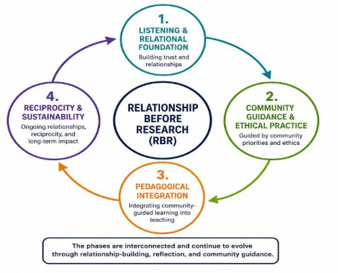
Figure 1 – The Relationship Before Research (RBR) Framework as Applied to Teaching.
Although presented as separate phases, they often overlap and evolve throughout the teaching process.
Phase 1: Listening and Building a Relational Foundation
Safieh’s first instinct was to approach the project the way many academics are trained to: start with a course plan, define learning outcomes, and organize activities for the semester. However, after consultation with Carol Ducharme and collaboration with Elders from Curve Lake First Nation, it became clear that a different approach was needed. This required slowing down, listening carefully, and allowing relationships to guide the process.
In this first phase, conversations with Elders focused on community priorities, respectful engagement, ethical responsibilities, and what meaningful collaboration might look like in a teaching context. Rather than immediately organizing guest lectures or experiential learning activities, the early stages centred on trust and reciprocity. This reflected Wilson’s (2008) concept of relational accountability, where teaching is shaped by responsibilities to the relationships that make it possible.
This phase also reinforced the importance of students learning directly from Elders and community members as well as through guided experiences. Rather than positioning the instructor as the primary authority on Indigenous knowledge, the work emphasized humility, relational learning, and shared guidance.
As trust developed, Elder and community input began to shape decisions about classroom integration, student preparation, reflective activities, journaling, and appropriate ways to introduce Indigenous-informed learning into undergraduate courses. This highlighted the importance of consultation before implementation and relationships before course design.
Phase 2: Community Guidance, Teaching Integration, and Ethical Practice
Consultation could not happen only once at the beginning of the collaboration. As the partnership with Curve Lake First Nation continued to grow, ongoing conversations with Elders and community members remained central to decisions about teaching activities, experiential learning opportunities, and classroom engagement.
Elder and community guidance helped shape the integration of Indigenous-informed learning into undergraduate linguistics courses, including guest lectures, land-based learning opportunities, reflective activities, journaling, and classroom discussions. These were not treated as isolated course additions. Instead, this phase emphasized reciprocity, adaptability, and relational learning. The instructor’s role was not to interpret or represent Indigenous knowledge, but to listen, reflect, and learn under the guidance of Elders and the community.
Questions of ethical responsibility also became increasingly important, including student preparation, classroom reflection, and how community knowledge should be discussed and represented in teaching spaces. The work was informed by OCAP® principles, particularly around consent, accountability, and respectful engagement.
This phase also highlighted the need for responsiveness in community-guided teaching. Rather than relying only on standard university structures or predetermined classroom plans, teaching activities continued to evolve through community input.
Phase 3: Pedagogical Integration
In the classroom, the work invited students to approach language as more than course content. In Safieh’s undergraduate sociolinguistics courses, Elder-led teachings, reflective journaling, classroom discussions, and land-based learning helped students consider language in relation to social life, land, history, oral tradition, identity, relationships, and community knowledge. This approach aligns with Jo-Ann Archibald’s (2008) Indigenous Storywork principles, including respect, responsibility, reciprocity, reverence, holism, and interconnectedness.
One of the most meaningful components was a full-day land-based visit to Curve Lake First Nation, where students spent the day with Elders. They received teachings from Elders who carry this knowledge through lived experience, rather than learning only through abstract concepts or textbook material. The visit invited students to think about language, culture, and knowledge in more relational and land-based ways. Rather than positioning students as passive observers, it emphasized active engagement, responsibility, and community guidance.
This phase also reinforced the importance of careful preparation before community-engaged learning. Before the visit, students participated in discussions and reflective activities focused on positionality, respectful engagement, community protocols, and the historical impacts of colonial education. This helped them enter the space with greater humility, respect, and awareness.
Following the visit, reflection remained central throughout the process. Through journaling, written responses, and discussions connected to Elder teachings and the land-based learning experience, students were encouraged to think critically about language, relationships, community, and accountability. These activities helped them connect course concepts to lived experience in more meaningful ways.
Student reflections suggested that the visit felt different from learning abstract concepts in a classroom. Several students noted that they were not only learning about language, culture, and history, but receiving these teachings from Elders who had lived these experiences and generously shared their knowledge.
For some students, the visit was also deeply moving and healing. It created a stronger sense of connection, respect, and responsibility and helped them understand that learning in this context is not only intellectual, but also relational and ethical.
What This Looked Like in Practice
In practice, this approach included Elder-led guest lectures, classroom discussions, journaling, and a land-based visit to Curve Lake First Nation. Students prepared beforehand through discussions of respectful engagement, positionality, colonial histories, and local protocols. After the visit, they participated in guided discussions and written reflections about language, relationships, accountability, and experiential learning.
Phase 4: Reciprocity and Sustainability
One of the most important lessons from this work is that community-engaged teaching cannot end when a course or semester finishes. Within the RBR Framework, reciprocity means considering how teaching practices and experiential learning can support long-term community priorities. In the Curve Lake collaboration, this meant continuing conversations about how the teaching could evolve in respectful and sustainable ways. Rather than treating Indigenous-informed teaching as a one-time activity or isolated guest lecture, the emphasis remained on accountability, consultation, and long-term collaboration.
Sustainability also involved encouraging students to engage with community-created educational materials, journaling, and discussions that connected classroom learning to broader histories and responsibilities. Ultimately, sustainability is not simply about repeating an activity in a future course. It is about continuing dialogue and remaining accountable to the people and communities who make this teaching possible.
Reflections and Practical Challenges
Implementing community-guided teaching in higher education can be deeply meaningful, but it requires patience, flexibility, and reflection. One challenge is balancing institutional timelines with relational ones. Universities operate through semesters, course schedules, assignment deadlines, and curriculum planning, while relationships develop gradually through trust and continued presence. Educators may therefore need to slow down and avoid moving activities forward before guidance is fully established.
Another important consideration involves reconsidering the instructor’s role. In community-guided teaching, the instructor is not the primary knowledge holder or decision-maker. This requires careful listening, openness to guidance, and recognition of community expertise. For many educators, this means moving away from instructor-centred approaches and creating opportunities for students to learn from Elders and community members.
Accountability must also be part of teaching practice itself. Community-engaged learning should not become symbolic, temporary, or disconnected from community priorities. Educators need to consider how Indigenous knowledge is represented in the classroom, who benefits from the learning experience, and whether relationships continue beyond a single guest lecture, classroom visit, or experiential activity.
Recommendations for Educators
For educators interested in community-guided teaching, the RBR Framework offers several practical starting points. Relationship-building should begin before developing a syllabus, experiential learning activity, guest lecture, or assignment. Meaningful engagement takes time and cannot be rushed to fit semester timelines.
Consultation should continue throughout the process, since community priorities, concerns, and availability may shift. This work also benefits from institutional support, including teaching and learning centres, experiential learning offices, Indigenous initiatives offices, libraries, and administrative partners.
Student preparation is equally important. Before community-engaged learning, students need space to reflect on positionality, colonial histories, respectful engagement, and local protocols. Journaling, discussion, and classroom preparation can help them enter these learning spaces with humility and responsibility.
Finally, instructors need to remain responsive. Community-guided teaching cannot always follow a rigid syllabus or predetermined plan. Elder availability, evolving relationships, and community priorities are central to ethical teaching practice.
Conclusion
Integrating Indigenous perspectives into higher education teaching is not simply a matter of adding content to a syllabus. It requires attention to relationships, responsibilities, community priorities, and guidance. The RBR Framework encourages educators to slow down, listen carefully, and build community-engaged teaching through reciprocity and sustained collaboration. By prioritizing relationships over course design, classroom implementation, and institutional timelines, educators can move beyond symbolic inclusion toward more meaningful teaching and learning.
Acknowledgment: We thank the Curve Lake First Nation community and the Curve Lake First Nation Chief and Council for their support of this work, and in particular Elder Dorothy Taylor and Elder Phyllis Williams, who are the Community Leads for the broader Curve Lake language and cultural documentation and revitalization work.
Carol Ducharme is a Saulteaux community member of Keeseekoose First Nation. She has an interdisciplinary background in Dental Hygiene, Adult Education, Indigenous Education, Indigenous pedagogies, and curriculum integration. Her work is grounded in relational values, lived experience, and the Indigenous perspectives and teachings received through relationships with Elders, Knowledge Keepers, communities, and learners. Her experience spans across post-secondary education, Indigenous community engagement, faculty development, and project management. She currently works in the Indigenous Initiatives Office at the University of Toronto Scarborough.
She holds a Master of Education (Post-Secondary Studies), a Bachelor of Education (Aboriginal Adult Education), and a Diploma in Dental Hygiene, along with additional training in health, mental health, and trauma-informed approaches. In her university-facing work, she supports faculty in integrating Indigenous perspectives, knowledge, and pedagogies into curriculum, teaching practice, and student learning experiences.
Sharing knowledge and responsibilities is a central motivator in her work. She supports learning spaces where Indigenous knowledge is approached with humility, accountability, respect, and reciprocity. In a previous role as Assistant Director of Indigenous Initiatives at the University of Toronto, she supported reconciliation-focused initiatives, Indigenous programming, and a community language revitalization project with Curve Lake First Nation.
Dr. Safieh Moghaddam (PhD, University of Toronto) is an Associate Professor (Teaching Stream) of Linguistics in the Department of Language Studies at the University of Toronto Scarborough (UTSC). Her research concentrates on sociolinguistics (the interaction of language, culture, gender, and race/ethnicity), linguistic typology and universals (the documentation of minority and endangered languages, as well as the syntax and morphology of endangered and less-studied languages). In the classroom, she focuses on active and cooperative learning and on course design for hybrid (dual delivery) and fully online formats. She has developed and redesigned undergraduate courses at all levels, aligning assessments with clear learning outcomes and creating learner-centered syllabi and activities. Her teaching approach emphasizes consistent, actionable feedback and strong student-instructor relationships to foster engagement, equity, and student success.
References
Archibald, J.-A. (2008). Indigenous storywork: Educating the heart, mind, body, and spirit. UBC Press.
Battiste, M. (2013). Decolonizing education: Nourishing the learning spirit. Purich Publishing. First Nations Information Governance Centre. (2014). Ownership, control, access and possession (OCAP™): The path to First Nations information governance. https://fnigc.ca/ocap-training/
Kirkness, V. J., & Barnhardt, R. (1991). First Nations and higher education: The four R’s: Respect, relevance, reciprocity, responsibility. Journal of American Indian Education, 30(3), 1-15.
Kovach, M. (2021). Indigenous methodologies: Characteristics, conversations, and contexts (2nd ed.). University of Toronto Press.
Smith, L. T. (2021). Decolonizing methodologies: Research and Indigenous peoples (3rd ed.). Zed Books.
Truth and Reconciliation Commission of Canada. (2015). Calls to action. https://ehprnh2mwo3.exactdn.com/wp-content/uploads/2021/01/Calls_to_Action_English2.pdf
Tuck, E., & Yang, K. W. (2012). Decolonization is not a metaphor. Decolonization: Indigeneity, Education & Society, 1(1), 1-40.
Wilson, S. (2008). Research is ceremony: Indigenous research methods. Fernwood Publishing.
Wilson, S., Breen, A. V., & DuPré, L. (Eds.). (2019). Research and reconciliation: Unsettling ways of knowing through Indigenous relationships. Canadian Scholars.